What Makes a Roofing or HVAC Website Generate Leads Instead of Just Looking Good
A lot of contractor websites have the same problem: they were built to impress the owner, not to help a homeowner take the next step.
That sounds harsher than I mean it, but it shows up all the time. The site has a nice hero image, a polished logo, maybe even a slick animation. Then you try to use it like a real customer. You are on your phone, your AC is struggling, or you just found a leak after a storm, and now you have to hunt for the phone number, pinch and zoom to read text, or fill out a form that asks for far too much.
A good-looking website is not useless. First impressions matter, and a professional homepage helps establish trust. But for roofing, HVAC, plumbing, electrical, remodeling, pool building, landscaping, and other home service businesses in the United States, looks are only the starting point. The real job of the website is to turn urgency and interest into calls, form submissions, booked appointments, and qualified leads.
The difference between a brochure site and a lead-generating site is usually not one dramatic feature. It is a series of practical decisions that make it easier for the right visitor to act.
Homeowners do not browse contractor websites the way owners think they do
Most people do not settle in with coffee and spend twenty minutes admiring your website. They arrive with a need. Sometimes that need is urgent, sometimes it is planned, but either way they are looking for a few things quickly: do you offer the service they need, do you work in their area, do you look trustworthy, and how do they contact you right now?
That is why the homepage has to communicate clearly and fast. A strong visual impression matters, but the message matters more. If someone lands on your site in the first place, they should not need detective skills to figure out whether you do roof replacement in Katy, emergency AC repair in The Woodlands, or panel upgrades in Sugar Land.
One of the most common mistakes I see is vague copy that says things like “quality solutions for all your needs.” That may sound polished, but it does not answer the visitor’s real question. Clear beats clever. A contractor website should say what you do, who you serve, and what the next step is. Fast.
The businesses that consistently generate leads online usually make their value obvious in the first screen or two. They do not bury service categories under abstract marketing language. They do not make the user guess whether they handle residential work, light commercial work, repairs, replacements, maintenance, or new installations.
Speed is not a technical detail, it is a lead issue
Owners sometimes treat site speed as something the developer cares about and the customer never notices. In practice, people notice immediately, even if they never use the word “performance.”
A slow website feels unreliable. The page hangs. The images crawl in. The form lags. On a desktop in a quiet office, that is annoying. On a phone in a driveway, attic, or mechanical room, it is enough to make someone hit back and call the next company.

Fast load speed matters because local service traffic is often high intent. These are not casual visitors reading industry news. They are homeowners and property managers trying to solve a real problem. Every second of friction raises the odds that they leave before they call.
This is especially true when the site is overloaded with giant video banners, oversized photo files, fancy transitions, or bloated plugins. Owners often approve those features because they look impressive in a presentation. Then months later they wonder why traffic is not producing enough leads.
A practical contractor site keeps the visual polish but trims the dead weight. Compressed images, clean page structure, fewer unnecessary scripts, and sensible hosting all help. None of that is glamorous, but it directly affects whether a visitor sticks around long enough to contact you.
Mobile-first is not optional anymore
If your site works beautifully on a laptop but becomes clumsy on a phone, it is leaking leads.
That matters because many local service searches happen on mobile devices, and click-to-call behavior is a real part of how people choose local businesses. Someone whose water heater failed or whose AC quit in July does not want to fill out a ten-field form on a tiny screen. They want reassurance, a phone number they can tap, and a fast response.
A mobile-first contractor site does a few things well. Buttons are large enough to tap. The phone number is visible without scrolling. Service pages are readable without zooming in. Forms are short. The menu is simple. Photos look good without slowing the page to a crawl.

It also respects how people behave in the field. A roofing prospect may be standing in the yard after noticing shingles on the ground. A homeowner searching for emergency heating repair might be on a phone with one hand while checking the thermostat with the other. If the site demands patience, they will give that patience to someone else.
The best contractor websites remove tiny points of friction
Most lost leads do not come from one catastrophic flaw. They disappear through a dozen small annoyances.
Maybe the phone number is hidden in the footer. Maybe the quote form asks for budget, timeline, address, project type, and preferred appointment window before the visitor even knows if you serve their city. Maybe the service area is vague. Maybe the reviews are only on Google and never make it onto the site. Maybe the gallery is outdated, or the only call to action says “learn more” when the person is ready to call now.
When you look at high-performing contractor websites, they usually feel easy. That is not an accident. Every page is built around the next action.
Here are five elements that consistently make the difference:
- A clear click-to-call button that stays easy to find on mobile.
- Short quote forms that ask only for what is needed to start the conversation.
- Service pages and service-area pages that match what people actually search for.
- Trust signals on the site, especially reviews, project photos, and accurate business information.
- Fast follow-up, whether that comes from staff, missed-call text-back, chat, or another response system.
Each of those sounds simple, and that is exactly the point. Lead generation on a contractor website is usually about execution, not novelty.
Short forms beat ambitious forms almost every time
Owners often ask for long forms because they want better lead quality. I understand the impulse. If the form collects square footage, equipment brand, insurance details, project goals, and a preferred financing range, maybe the office can pre-qualify people before anyone calls them back.
The problem is that most homeowners do not want to do paperwork before they even know whether they like you. The longer the form, the more people drop off. This is especially true on mobile.
For many contractors, the best website form is surprisingly short. Name, phone, maybe email, maybe ZIP code, and a brief project description. That is enough to start the conversation. If your office has good follow-up habits, you can gather the rest later.
I have seen the same pattern across trades. The owner thinks the form needs to gather everything. The customer thinks, “I just need someone to call me back.” The website should match the customer’s state of mind, not the owner’s dream intake sheet.
Reviews belong on your website, not only on third-party platforms
Homeowners compare. They always have, but now they do it faster. If they click from your Google Business Profile to your site and the site has no visible proof that other people trust you, that is a missed opportunity.
Consumer behavior around contractors is tied closely to reviews and trust checks. That does not mean you need to plaster every page with giant testimonial sliders. It means your website should make trust easy to verify. Selected Google reviews displayed on the site can help. So can accurate contact information, real project photos, clear service descriptions, and current business hours.
There is also a practical local visibility angle here. Google uses public information from official business websites to understand and support local business presence. That means your site and your Business Profile should agree on core facts like services, phone number, location details, and hours. Inconsistency creates confusion for users and is simply harder to maintain.
Use a local phone number when possible. Keep your hours accurate. Make sure your service areas are not hidden in vague copy. These sound like housekeeping details, but they influence trust more than owners sometimes realize.
Before-and-after galleries do more than decorate a page
Project galleries are often treated as filler. They should not be.
For roofing, remodeling, landscaping, painting, pool building, and even certain HVAC or electrical jobs, before-and-after photos answer questions that text cannot. They show workmanship. They show scope. They give the homeowner a sense of what “done well” looks like. They also make the business feel real.
The key is relevance. A gallery full of random stock-looking images does not help much. A gallery that is organized around actual project types is stronger. Roof replacement before-and-after. Condenser replacement. Bathroom remodel. Outdoor lighting upgrade. Irrigation overhaul. Retaining wall installation. Those examples let visitors see themselves in the work.
This can also support lead quality. A homeowner considering a premium renovation may browse those project photos and self-select into contacting you. At the same time, a customer needing basic repair work can still find the service page that speaks to their immediate need.
Service pages and service-area pages are where lead generation gets practical
Many contractor sites try to explain the whole business from one homepage and one generic services page. That is rarely enough.
If you offer multiple services, clear service categories and more detailed service pages help visitors find what they need. They also support local search visibility. Someone searching for “furnace repair near me” is looking for something different from a person searching “ductless mini split installation.” A page that tries to cover every HVAC service in one block of text usually serves none of those searches particularly well.
The same logic applies to geography. If you work across several cities or neighborhoods, your site should make that obvious. A homeowner wants to know if you serve their area without having to call and ask. Service-area pages can help if they are useful, specific, and accurate. Thin pages stuffed with city names are not much help. But a well-built local page that explains the services offered in that area, shows relevant contact information, and gives the visitor a clear next step can do real work.
For Google Business Profile traffic, this becomes even more important. A well-matched landing page supports the user journey by surfacing location details, phone number, hours, photos, reviews, and a primary action. That is not theory. It aligns with how local search and local ad experiences are increasingly designed to drive calls and lead submissions.
Missed-call text-back and chat can rescue leads that would otherwise vanish
Most contractor owners know the pain of missed calls. The office is busy, the dispatcher is tied up, a field manager is on another line, and a potential customer moves on after one ring and no answer.
A website alone cannot solve that. But it can be part of the fix.
If your phone system supports missed-call text-back, that can save opportunities after business hours or during busy stretches. If someone taps the number from your website and nobody answers, a quick follow-up text can keep the lead warm. The same goes for site chat, especially when it is set up to help users get basic answers or leave their info without waiting. Some businesses now use AI chat tools for this first layer of contact, which can be useful if they are implemented carefully and do not trap users in awkward scripts.
The caution here is simple: do not let automation pretend to be service when it is really a dead end. If chat cannot answer common questions, collect contact info cleanly, or route the lead properly, it becomes one more obstacle. The best systems support human follow-up rather than replacing it.
Common mistakes that make a contractor website look nice but underperform
There are patterns I see again and again, and most are fixable without a full reinvention.
A pretty homepage with weak calls to action is a classic. So is a site that talks endlessly about the company but barely mentions what the customer should do next. Another common one is stuffing all services into one vague page while ignoring specific search intent. Then there is the trust gap: no reviews on the site, no project photos, no clear service area, and no obvious reason to choose the business.
The other major issue is stale ownership. Nobody updates the site because nobody clearly owns it. The office manager assumes the marketing person handles it. The owner assumes the web developer will suggest changes. The freelancer who built it two years ago is hard to reach. So the site slowly drifts out of date.
If you want a quick gut check, look for these warning signs:
- Your phone number is hard to find on mobile.
- Your quote form asks too many questions before any trust is built.
- Your service areas are unclear or inconsistent with your Google Business Profile.
- Your site has little visible proof of real work, such as reviews or project photos.
- Updating the site feels so difficult that nothing gets updated.
Those issues cost leads quietly. That is why many owners underestimate them. There is no alarm bell, just lower conversion over time.
DIY builders, freelancers, agencies, and managed subscriptions all have trade-offs
There is no single right way to get a contractor website built. The best option depends on budget, urgency, internal bandwidth, and how much ongoing support you need.
DIY builders are the cheapest starting point and can work for very small operators who need something simple right away. The downside is that the owner usually becomes the designer, copywriter, strategist, editor, and quality control department. That is a lot to ask from someone already running jobs, crews, and estimates.
Freelancers can be a good middle ground when you find a strong one. You may get more personal attention and lower cost than an agency. The risk is capacity. One person can be excellent, but if they disappear, get overloaded, or are not strong in both design and local lead generation, you are exposed.
Agencies often bring a broader skill set and more process. They can be a good fit for larger contractors with bigger budgets and more complex needs. The trade-off is cost, and sometimes bureaucracy. Some agencies are excellent. Some hand you off to layers of account management while changes take weeks.
Managed website subscriptions have become popular because they spread cost out monthly and usually bundle hosting, maintenance, support, and updates. For busy home service owners, that can be practical. The value depends on execution. If the provider is responsive and understands contractor lead generation, it can remove a lot of operational drag. If not, you may end up renting a site that still does not improve results.
One example in that category is Scalable Websites in Houston, operated by Douloi Inc. They focus on home service contractors and package design, hosting, security, ongoing updates, and a dedicated project manager into a monthly model. For some owners that kind of arrangement is easier to budget and maintain than a large upfront build. For others, a trusted freelancer or a strong local agency may still be the better fit. The right answer depends less on format and more on whether the provider understands what a contractor website is supposed to do after launch.
A website should support the way your business actually sells
One reason contractor websites underperform is that they are designed in isolation from the business itself.
If your sales process depends heavily on inbound calls, then click-to-call and fast mobile access should be central. If your office books a lot of appointments after hours, missed-call text-back and chat may matter more. If you sell larger remodeling projects, then the gallery, project pages, and trust content may deserve more attention. If you dominate in a few specific towns, your service-area pages and local search consistency should be tighter.
The website should reflect how leads become revenue in your real operation. That sounds obvious, but many sites are built as visual projects instead of sales tools.
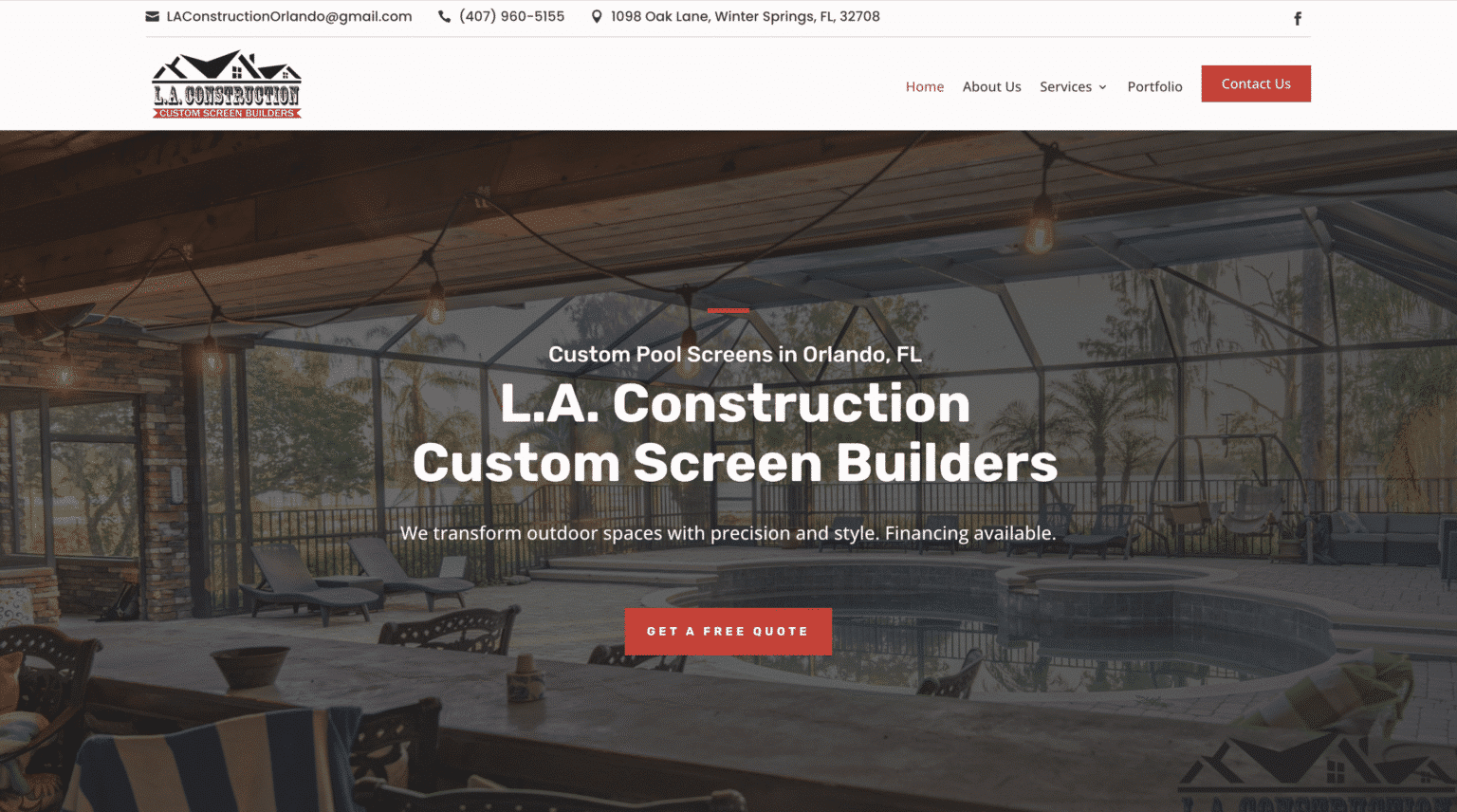
A good website does not replace reputation, follow-up, or field performance. It amplifies them. If your company answers the phone, shows up, communicates well, and does solid work, your site should make it easier for people to discover that and act on it. If the site slows them down, confuses them, or makes them work too hard to contact you, then even a beautiful design is not helping much.
The strongest contractor websites are visit the site rarely the flashiest. They are the easiest to use, the clearest to understand, and the quickest to turn interest into contact. That is what makes them generate leads instead of just looking good.
About Scalable Websites
Scalable Websites builds professionally designed, AI-powered websites for roofers, HVAC companies, plumbers, electricians, remodelers and other home service contractors, with hosting, security, unlimited updates and lead capture included in one monthly plan.
396 Mallorn Lane, Montgomery, TX 77316
Phone: (832) 979-2478
Website: scalablewebsites.com
About Scalable Websites
Scalable Websites builds professionally designed, AI-powered websites for roofers, HVAC companies, plumbers, electricians, remodelers and other home service contractors, with hosting, security, unlimited updates and lead capture included in one monthly plan.
Houston, TX · Serving contractors nationwide
Phone: (832) 979-2478
Website: scalablewebsites.com